BOAM-selfdiagnostics
Diagnostics, psychoeducation and family therapy in one
• Short, structured family therapy
• For children and young people together with their parents
• Suitable for all types of mental health issues
• Can be used by coaches and counsellors for milder issues
• Can be used by generalists and specialists in mental health care for more serious issues
• For a disorder-free narrative, explaining mental health issues without assigning blame and providing insights for dealing with them
On 15 September 2026, Boom Publishers will release:
• Therapist’s Manual (in Dutch)
• Therapist’s Manual (in Dutch)
Along with the working materials:
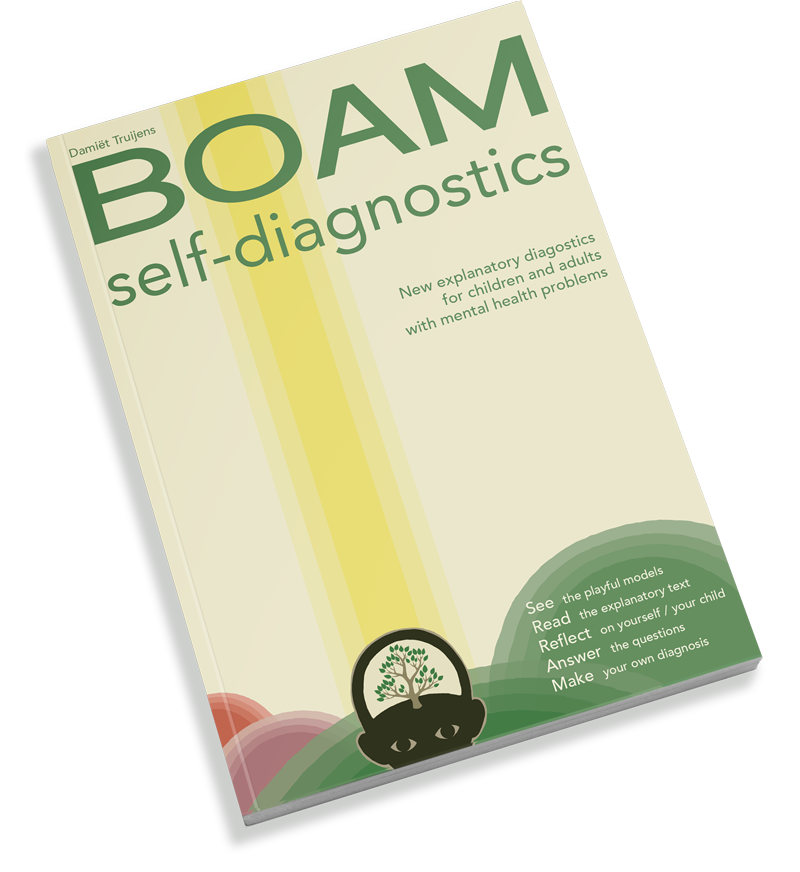
• Workbook with the corresponding diagnostic assignments (available in Dutch and English)
How BOAM self-diagnostics works
Children, young people and their parents receive universal psychoeducation together, through 10 playful BOAM models. These models use simple, visual language, are disorder-free and inclusive (applicable to all cultures, religions and identities).
After each BOAM model, the family completes diagnostic assignments by applying the models; not only to the child or young person but also to the parents and environmental factors. Their own answers together form an individual diagnosis and a family diagnosis. These explain the problems in a non-judgmental way (even in cases of extreme behaviour) and offer a joint and restorative narrative.
During this process, the family can learn to reflect on their experiences together, develop shared insights and improve their communication skills. This can activate their own problem-solving abilities and strengthen the parents’ parenting skills.
Finally, the last model results in a joint decision on the recovery plan, which can enable the family to continue to address the mental health problems independently after therapy, how their own network will be involved, and whether further therapeutic follow-up is needed and, if so, what exactly that will entail.
BOAM self-diagnostics meets the need for knowledge and autonomy among children, young people and adults in the 21st century. The simultaneous occurrence of disorder-free self-diagnostics, universal psychoeducation and effective family therapy helps the family and relieves the burden on youth care services.
Scientific publications
A first scientific article has been published on BOAM self-diagnostics as an option for a group of children and young people with serious problems for whom previous assistance had not been sufficiently effective.
A second scientific article has been published on a case study of BOAM self-diagnostics with the parents of a six-year-old girl with aggression regulation problems.
About Damiët Truijens
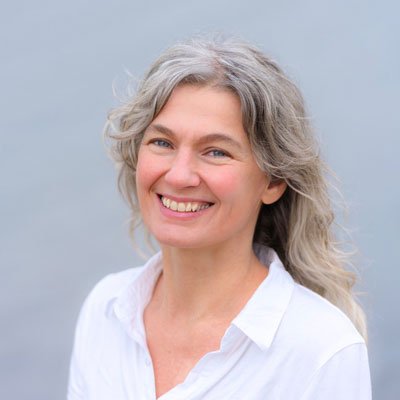
Damiët is an enthusiastic senior with over twenty years of experience working with children, young people and their parents. She worked for many years in youth care and specialist youth mental health care, and now has her own practice for relationship and family therapy. Her mission is to give everybody more autonomy in understanding, preventing and solving psychological problems.
Over the past 18 years, Damiët has developed BOAM self-diagnostics while working with clients. She designed and drew BOAM models with universal psychoeducation, and the responses and insights of children, young people and their parents helped to make the models increasingly clear. By applying the BOAM models together with each family to their personal situation, a form of self-diagnosis naturally emerged. This resulted in the workbook with the diagnostic assignments.